LinkedIn Discovery
Designing a new path for professionals to discover relevant knowledge, resources, and career guidance.
01INTRODUCTION
Project Overview
LinkedIn is a social platform focused on professional networking and career development. People use it to build connections, share opportunities and updates, strengthen their professional presence, and follow industry news.
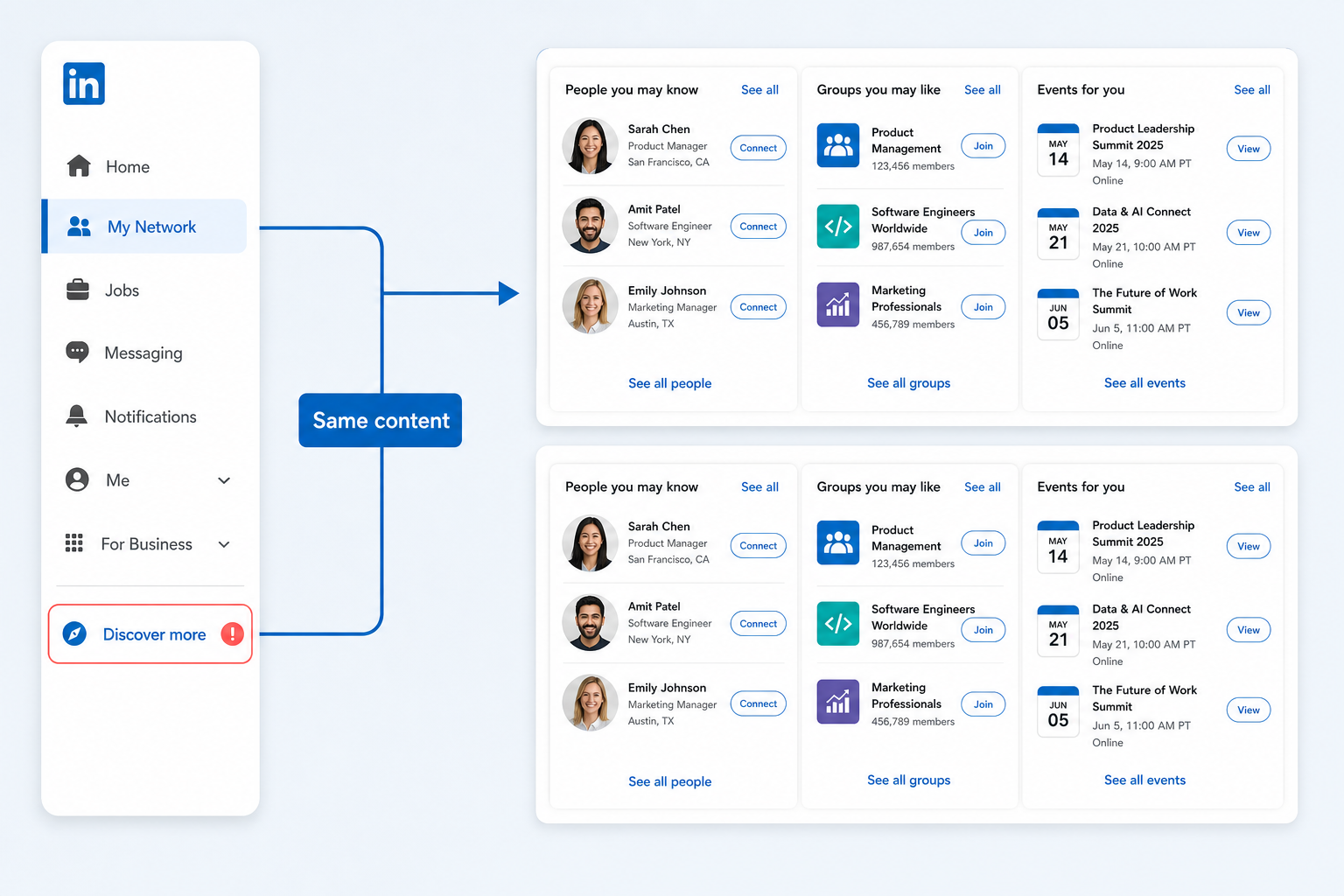
As a frequent LinkedIn user, I noticed that the “Discover More” section in the left navigation was underutilized. It primarily surfaced recommended people and pages—content that already appeared in “My Network.” This overlap prompted me to explore how the section could offer clearer value and create a more useful discovery experience.
This case study explores a feature concept that helps professionals discover knowledge and resources relevant to their skills and career development.
02HOW IT BEGINS
Problem Statement
Currently, the “Discover More” section in LinkedIn’s left navigation is underutilized. The content largely overlaps with “My Network,” resulting in unclear functionality and reduced value. This redundancy may lead to user confusion and a less engaging experience.
03DESIGN CHALLENGE
How might we help LinkedIn users discover more relevant knowledge and resources for their professional growth?
04DESIGN DIRECTION
Solution
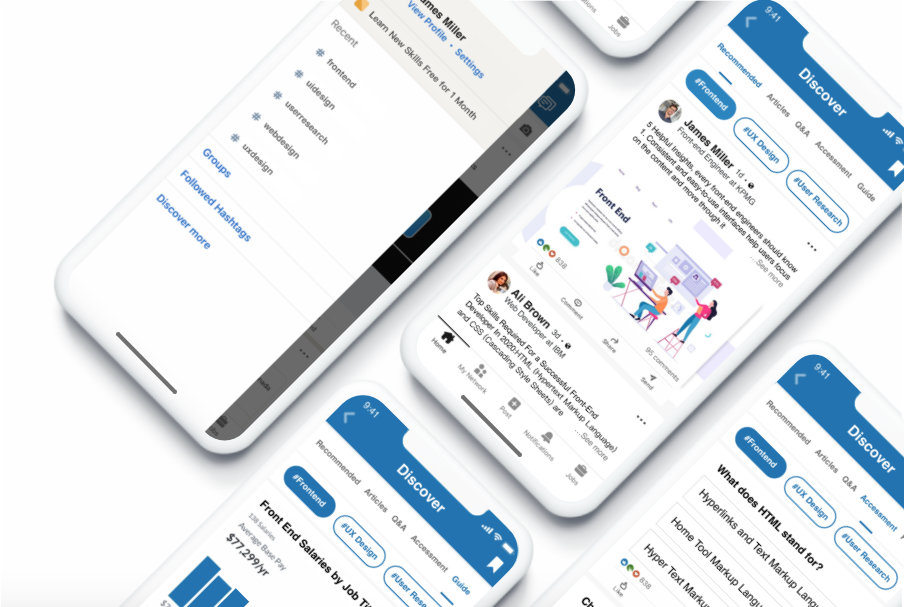
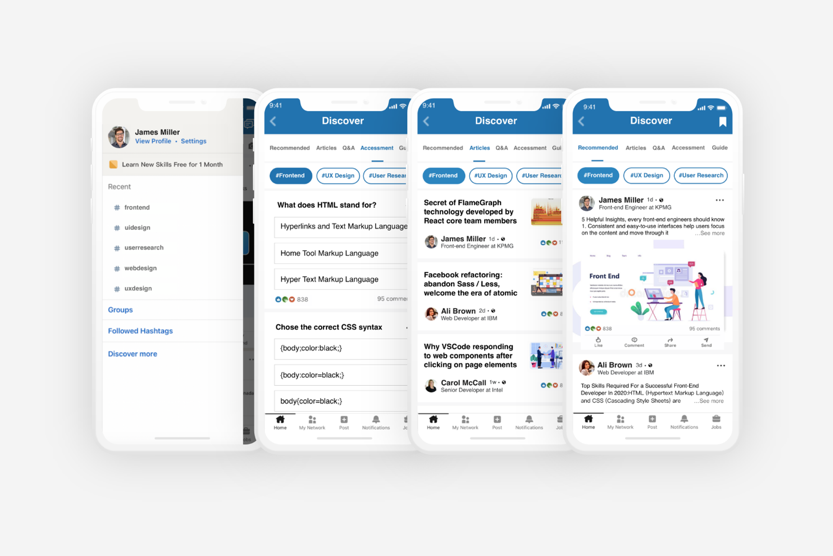
I reframed “Discover More” around professional growth rather than repeating existing network recommendations. The concept uses followed industries and hashtags to surface relevant articles, peer knowledge, skill assessments, and career guidance. This gives the section a distinct purpose while extending LinkedIn’s existing ecosystem.
05CONSTRAINTS
Constraints
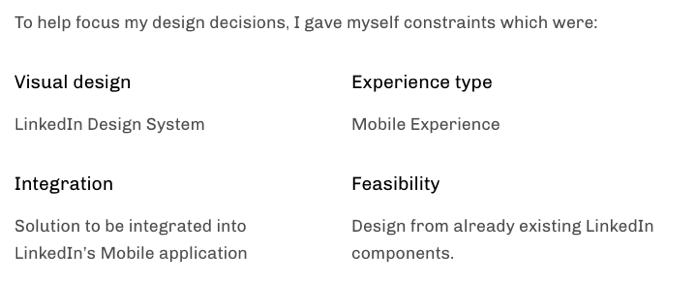
To help focus my design decisions, I established a set of intentional constraints to guide the direction of the work and ensure consistency across the experience. These constraints included:
06APPROACH
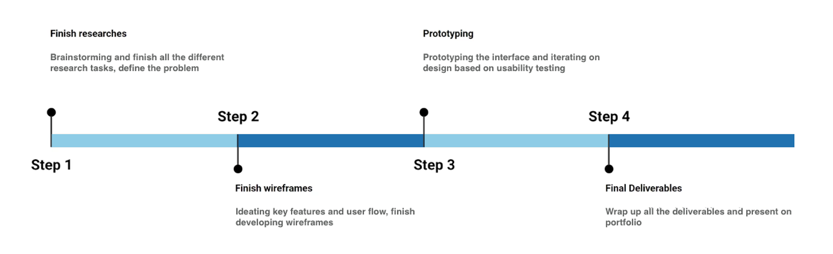
My Design Process
07USER RESEARCH
User Interview
I conducted interviews with 10 active LinkedIn users who have over 500 connections to see if there were any underlying common experiences or pain points. Some of my findings included:
- 80% of participants rarely or never used “Discover More.”
- Participants found the section confusing and low-value because its content duplicated other core features.
- They wanted richer knowledge and resources that could support their career development.
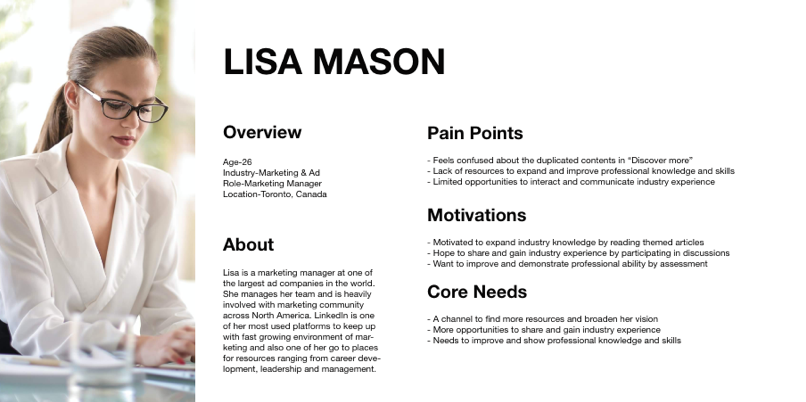
To get a better understanding of the target users, I created a persona that would exemplify the user type that I was targeting.
The persona helps give direction to what the intention and core needs of the design solution should be.
08IDEATION
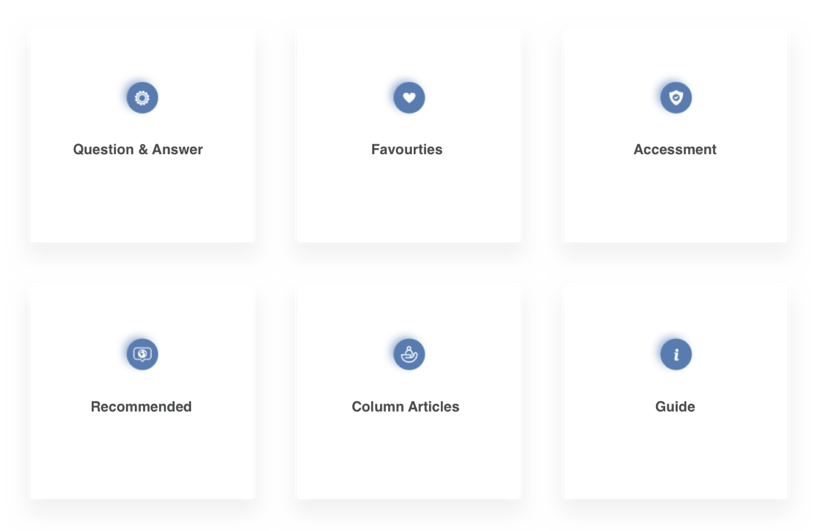
Determine the Features
I synthesized the interview insights into a focused set of features designed to address users’ needs and make the section more useful.
09FLOW DESIGN
User Flows
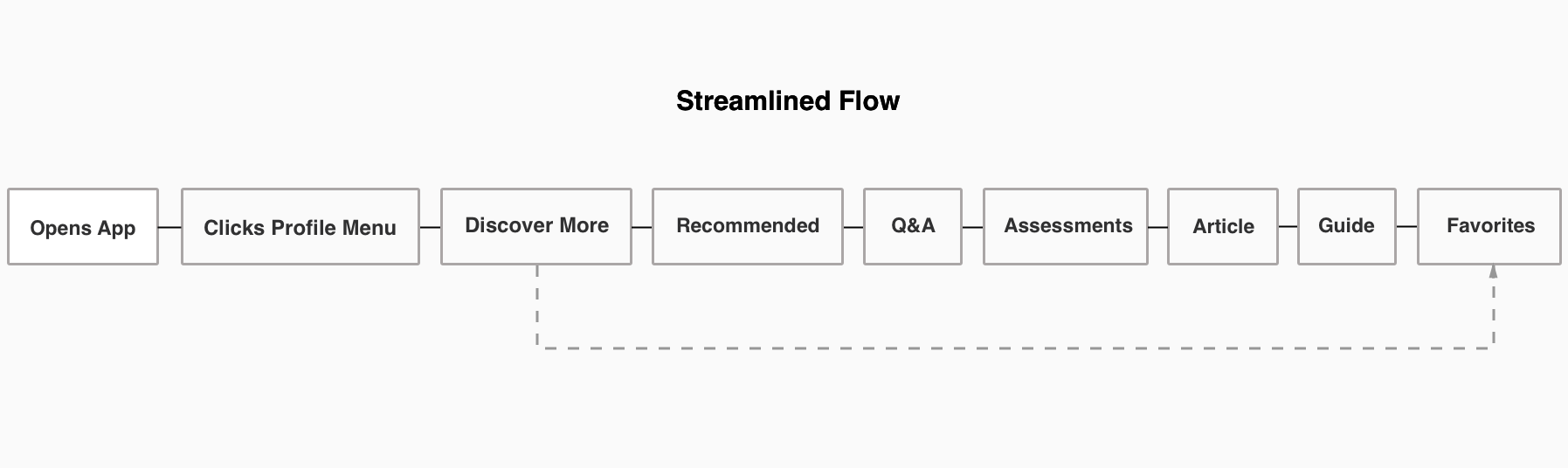
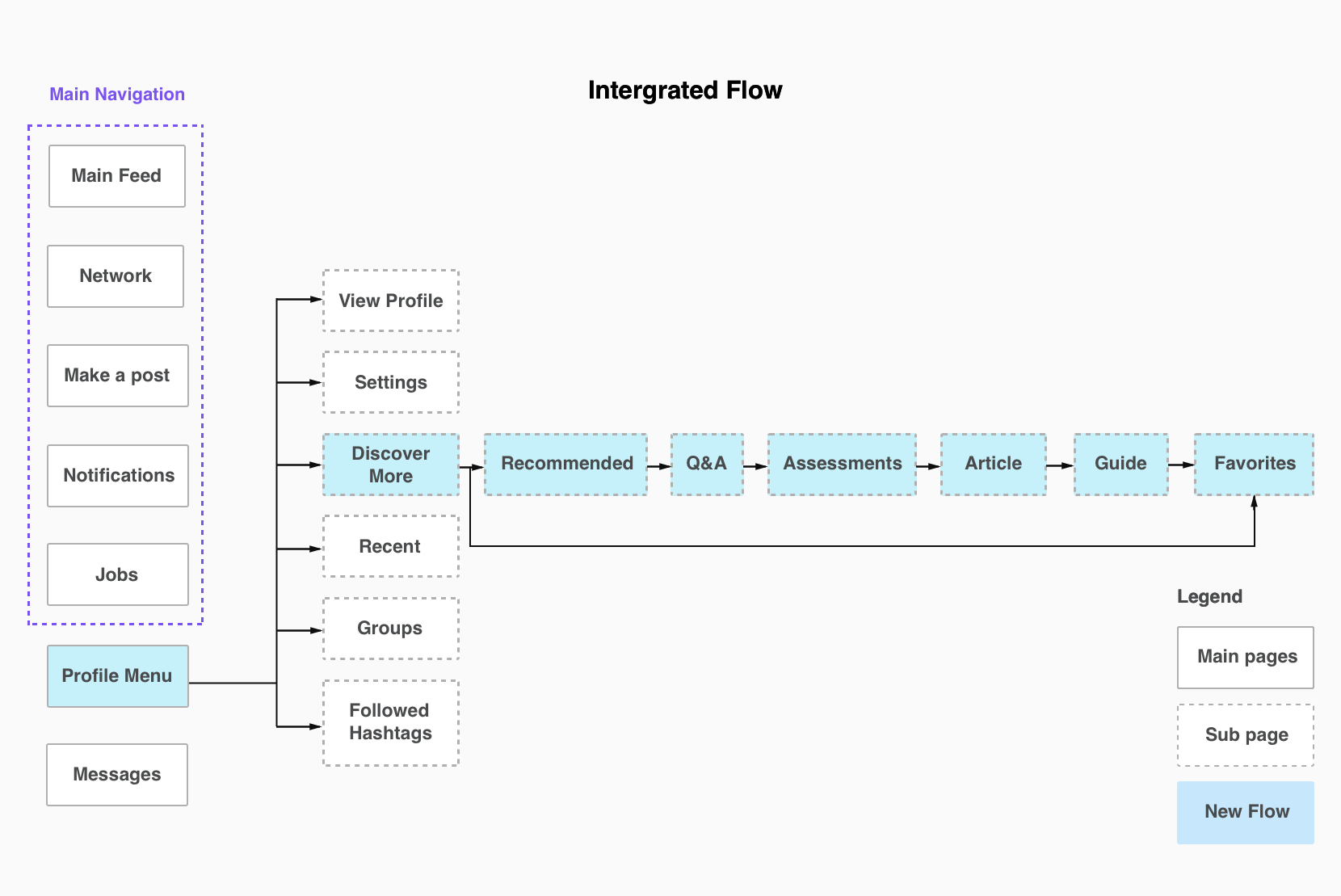
In order to visualize the journey that my target user would take, I created a single streamlined flow of actions as well as an integrated flow within LinkedIn’s core features.
The streamlined flow helps me figure out what sort of actions make sense for a user and what would be most intuitive in terms of actions.
The integrated flow helps me visualize where the streamlined flow could live within LinkedIn’s core functions.
10WIREFRAMING
Sketching the Interface
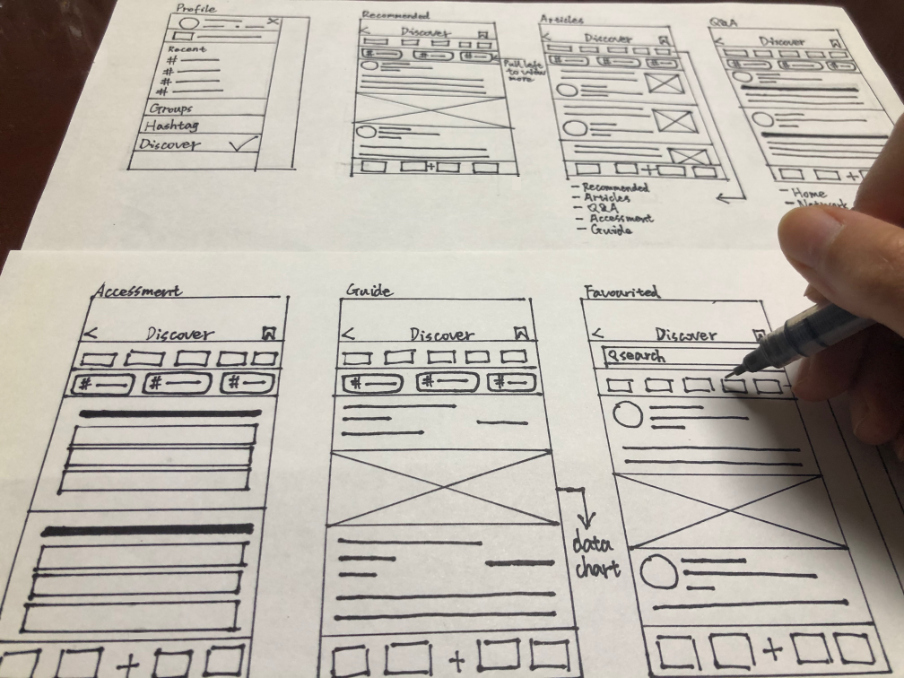
Once the streamlined and integrated flows were clear, I sketched low-fidelity wireframes to establish hierarchy, validate the design goals, and select the right components for each function.
Design Goals:
- Give users clear paths to strengthen their professional knowledge.
- Connect content to the industries and hashtags users follow.
- Make sure that designs feel native to LinkedIn’s current application.
11VISUAL EXPLORATION
Visual Design
A key constraint was making the concept feel native to LinkedIn. I reused established patterns and visual components rather than introducing unnecessary colors or unfamiliar interactions.
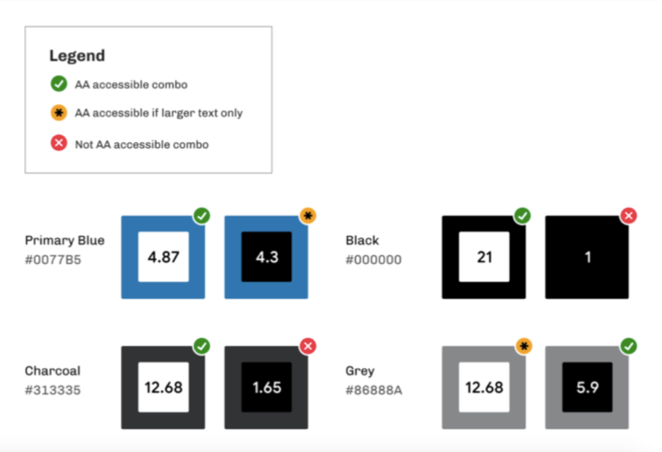
As an additional measure of accessibility and usability, I tested each color to determine its accessibility. Each color passed AA accessibility standards where needed.
12OUTCOME
Final Output
The final concept helps users strengthen their professional knowledge by discovering relevant resources, exchanging industry experience, assessing their skills, and receiving career guidance.
Recommendations surface high-quality posts on relevant industry topics, while Articles provide deeper analysis connected to followed hashtags. Q&A supports peer knowledge exchange, Tests help users assess their skills and earn certificates, and Guides provide industry data for people exploring new roles or career changes.
The redesigned “Discover More” section creates a clearer path to professional knowledge and career resources. By building with familiar LinkedIn patterns and brand guidelines, the concept can integrate naturally into the existing mobile experience.
13CLOSING
Reflection
This project challenged me to design within an established product and visual system. Working with existing patterns shifted my focus toward the quality of the concept, the user journey, and the specific pain points the feature needed to solve.
The main interaction challenge was choosing the right existing pattern at the right moment. Because I did not have access to LinkedIn’s internal analytics or design library, I based the concept on user interviews and reconstructed the interface from publicly available patterns. With internal data, I would validate the opportunity size and refine the recommendation logic.
In a future iteration, I would partner with an engineer early to validate technical feasibility, data requirements, and how the concept could scale within LinkedIn’s existing architecture.
14IMPACT
Future Development⚡
In future iterations, the “Discover More” feature can be improved with stronger personalization based on user interests, behavior, and network activity. This would help surface more relevant content and make discovery more tailored and meaningful.
It can also evolve into a more interactive experience by adding mentorship matching, structured learning paths, and progress tracking, turning it from passive browsing into active, continuous career growth.